Erectile Dysfunction in Young Men: What Causes It in Your 20s and 30s
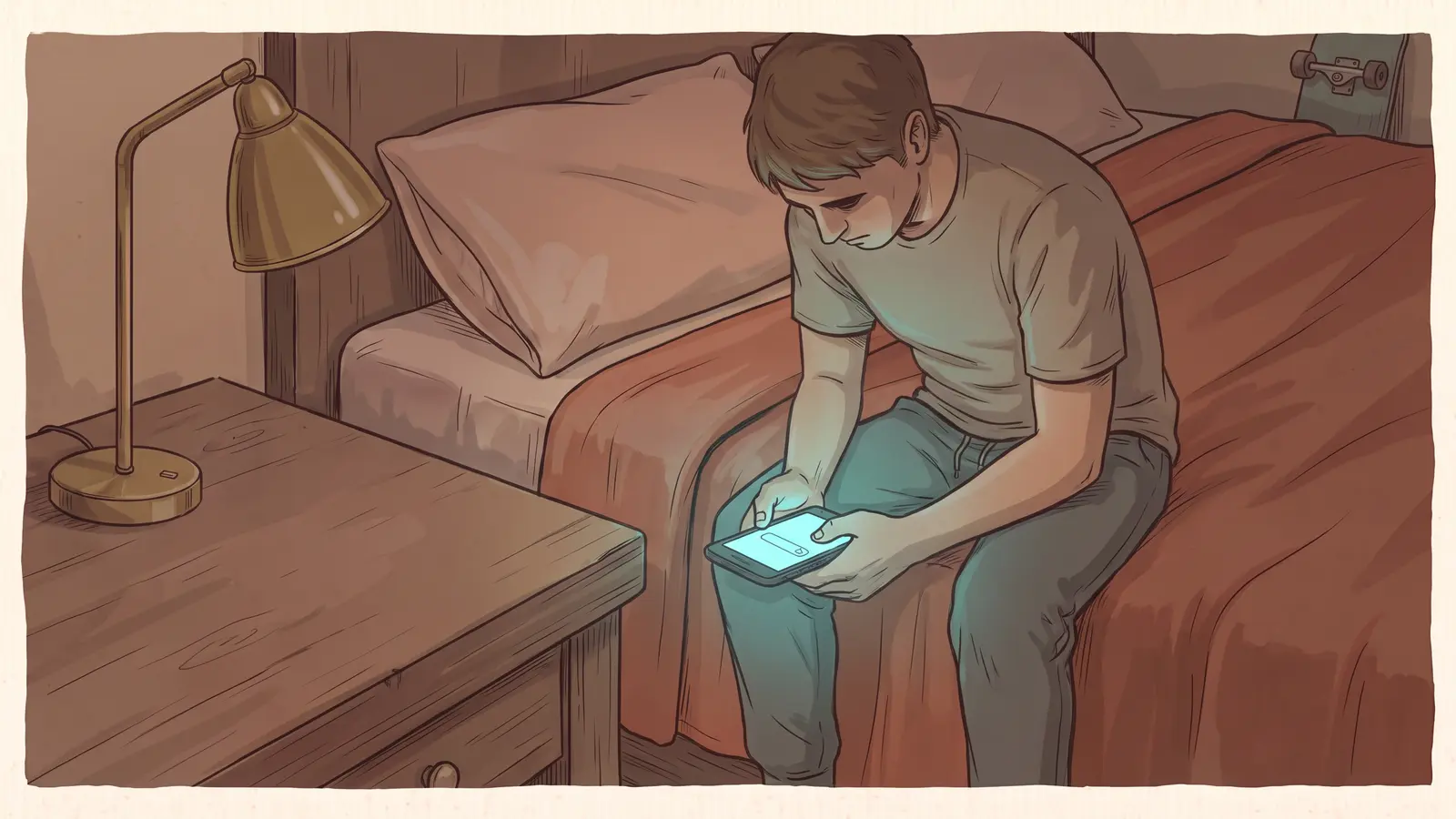
You're in your mid-twenties, healthy, maybe you even work out. Alone, everything works. And then you're in bed with someone you really want, and nothing happens. Or the erection is there and disappears the moment things get serious. Afterwards comes the thought that hurts most: this shouldn't be happening to me at my age.
It can. And it happens to far more young men than you think. Hardly anyone talks about it.
Are you too young for erection problems?
No. Erection problems are seen as an older man's issue, but that picture is wrong. In a study from a urology clinic, one in four men who sought help for new erection problems was younger than 40 (study, Journal of Sexual Medicine). And those are only the ones who actually went to a doctor.
If you hardly know anyone who's going through the same thing, it's not because it's rare. It's because men your age are the least likely to talk about it.
Still: get checked once
Even at 25, a medical check belongs in the picture. The blood vessels in the penis are very fine, so problems with the heart, blood vessels, blood sugar or hormones sometimes show up there earlier than anywhere else. Experts recommend taking erectile dysfunction seriously as a possible early warning sign (review, European Urology). That's especially true if the erection repeatedly fails when you're alone too, or has been getting gradually worse over months.
And a clean result isn't nothing. It takes away a worry that would otherwise lie in bed with you every time.
Why in young men it's usually in the head
In young, physically healthy men, the cause very often isn't in the blood vessels but in the nervous system. A clear sign: you regularly wake up with an erection, and alone it works reliably. Just not when it counts.
What morning erections tell you about the cause, and where that self-test has its limits, is in our article on morning erections.
You can't command an erection. It's controlled by the autonomic nervous system, the same one that regulates your heartbeat. As soon as your body rates a situation as a threat, it switches into a danger mode, and in that mode there is no erection. That's not a defect, it's a very old protective program. It just doesn't distinguish between a predator and the fear of failing in a moment.
What puts pressure on you at this age
In your early twenties or thirties, a lot comes together that triggers exactly this danger mode.
New situations. Many encounters are new: a different person, an unfamiliar apartment, no foreplay, no familiarity. In Till's experience, those moments often lack exactly the conditions that normally carry you, and nerves and overthinking take their place. That's why some men do fine in a steady relationship and not with a hookup, or the other way around.
That one time. It often starts with a single situation where it didn't work. It leaves a mark. The next time, the memory lies in bed with you, and exactly the thought "I hope that doesn't happen again" costs you the erection. That's how a one-off becomes a pattern.
How the fear of failing turns into a loop is in our article on performance anxiety.
The comparison. Everyone else seems to have sex effortlessly, all the time and without problems. Add to that the picture from porn of how sex supposedly goes: hard, long, always ready. If you measure yourself against that, you go to bed with a test instead of desire.
The habits. Many young men have been masturbating for years fast, with a tight grip and to porn. In Till's experience, a great many train their symptoms into themselves this way, because the stimulus of a real person can't keep up anymore.
The condom. For many, this is the moment the erection regularly drops: a pause, rushing, the thought "not now".
The expectation. In moderate amounts, alcohol is rarely the real reason either, in Till's experience. If you decide beforehand that it won't work after a couple of beers anyway, you create exactly the tension that blocks the erection.
Why pills alone often aren't the answer
Young men today get a pill very quickly, often with a few clicks online. For physical causes it's a legitimate, well-studied medication, and that's a decision for you and your doctor. But if the blockage starts in your head, the pill doesn't act there. It still often helps somewhat, and that's exactly where many men develop a new fear: it won't work without it anymore. At 25, that's a long road ahead.
What Viagra can and can't do for psychological erection problems is in our article on Viagra.
The good news: it was learned, so it can be unlearned
The danger mode, the mark from that one time, the grip you're used to: your nervous system learned all of it. And what it has learned, it can unlearn.
It still doesn't happen overnight. Most men should plan on three to four months, because your body has to learn again to feel safe during sex instead of going into alarm.
That's exactly why we're building Bedfit: structured training that teaches you, step by step, to stay in your body instead of in your head, first alone and then with a partner, and that keeps you going until it sticks.
How it all fits together, from the medical check to an honest timeline, is in our overview: how to stay hard longer.
Join the waitlist and be the first to know when we launch.