Performance Anxiety in Bed: Why It Shuts Down Your Erection and What Actually Helps
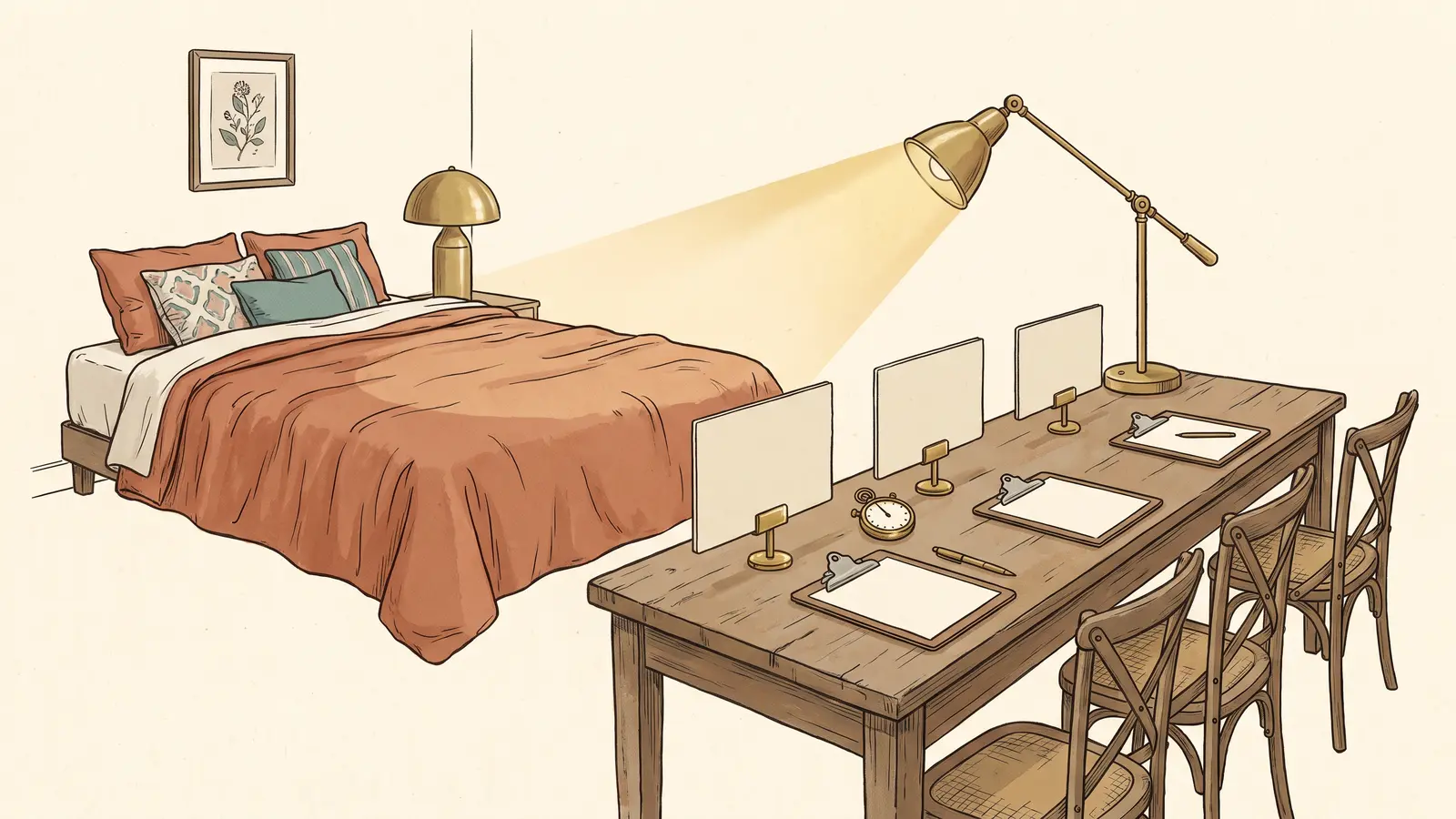
You're looking forward to the evening. And yet, hours before, the thought is already there: What if it doesn't work again? You go over when you last masturbated, whether you should take a pill just in case, how to make sure she doesn't notice if it happens anyway. And then, right at the moment that counts, the thing you were afraid of happens.
If that sounds familiar: that's performance anxiety. It isn't a character flaw, and it isn't a sign that something is wrong with you as a man. It's an alarm in your nervous system, and that alarm follows rules you can understand.
What performance anxiety does in your body
An erection is controlled by your autonomic nervous system, the same one that runs your heartbeat and your digestion. You have no voluntary access to it. Roughly speaking, this system knows two states: relaxed, and sex is possible, or alarmed, and it switches into fight mode. In fight mode, sexual function isn't part of the plan.
Your brain doesn't check whether the danger is real. The thought "I hope it works" is enough. To your nervous system, that's the same signal as a threat. That's why performance anxiety triggers exactly what it warns you about.
It also explains why things often work fine when you're alone. Alone, there's nothing to pass. As soon as another person is in the room, sex turns into a test.
Why it gets worse each time
Performance anxiety almost always has a history. Once it didn't work, often for a completely ordinary reason: too much to drink, tired, stressed. The next time, the worry is there before anything happens. The worry sets off the alarm, it doesn't work again, and that confirms the worry.
With every evening that ends this way, the pattern gets more solid. Most men don't realize it: the problem isn't the first time it failed, it's the chain of evenings afterwards, each one walked into with more pressure than the last.
Why planning makes it worse
The obvious response to performance anxiety is preparation. Timing your last masturbation, the right moment for the pill, the mood, the lighting, the plan in case it doesn't work. That feels sensible. But it's exactly what raises the pressure.
Because every measure tells your nervous system: this matters, this is a test, this must not go wrong. The more you build sex up beforehand, the more reliably your body switches into alarm. The preparation isn't the solution to the anxiety. It's part of it.
Till knows this from his own life. He did this kind of planning himself for over ten years, and he sees it in almost every man he works with. Very few ever think of trying the opposite.
What helps instead
If planning and control raise the pressure, the direction is obvious: less of it, not more. That sounds simple, but it isn't, because everything in you resists letting go of control. That's exactly where Till's training starts, for the next evening as much as for the long run.
For now, just this much: it isn't about pushing the anxiety away or pulling yourself together. It's about taking sex out of the exam room. As long as sex is a test, your nervous system stays on alarm.
Your partner isn't free of pressure either
One thought that helps many men: you're not the only one in bed putting pressure on yourself. For many women, too, sex is a situation where they watch themselves, judge themselves and can't let go. In Till's experience, pleasure gets faked far more often than men assume.
That doesn't mean your partner wants to make things hard for you. It means that you often both go into sex treating it like a test. And that openness on your side often takes the pressure off both of you, not just you.
Why technique alone isn't enough
Many men try to fix performance anxiety with technique: pelvic floor training, breathing exercises, a particular position. These aren't bad tools. But when your nervous system is anchored in fear mode, they often don't bring the change you're hoping for, no matter how hard you practice. Stored fear doesn't dissolve through muscle training.
Nor does it disappear because you understand it. You can agree with everything in this article and still feel the same alarm next time. Your nervous system doesn't learn from arguments, it learns from experience: from repeated situations where it was safe even though it expected danger.
When it takes more
If the performance anxiety has been around for a while, a few good evenings often aren't enough to break the pattern. Then it takes structured training that teaches your nervous system safety step by step, first alone, then with a partner. That doesn't happen overnight. Most men should plan on three to four months, although the mental work in particular often shows effects earlier.
And if it also repeatedly stops working when you're alone, get that checked by a doctor first. Then there may be more behind it than anxiety.
That's exactly why we're building Bedfit: structured training that teaches you, step by step, to take sex out of the exam room, first alone and then with a partner, and that keeps you going until it sticks.
How performance anxiety connects to the other causes of erection problems, from the medical check to an honest timeline, is in our overview: how to stay hard longer.
Join the waitlist and be the first to know when we launch.